The Autonomous Drone Project
An IEEE Concordia project that evolved from competition drone to autonomous hovering platform — learning ArduPilot, optical flow, and PID tuning along the way.
Overview
This project started as an ambitious entry for the NARC UAV competition — a forest fire prevention drone with autonomous mission planning. Reality intervened: we needed drone licenses, competition applications, and funding to send a team to Ontario. None of that materialized.
So we pivoted. Instead of abandoning the project, we reduced scope and focused on what we could actually achieve: a stable autonomous hovering platform.
The Evolution
| Original Goal | Final Deliverable |
|---|---|
| Forest fire detection | Autonomous hover mode |
| GPS mission planning | Optical flow altitude hold |
| Human following | Stable flight platform |
| Competition entry | Learning experience |
What We Built
Altitude Hold System
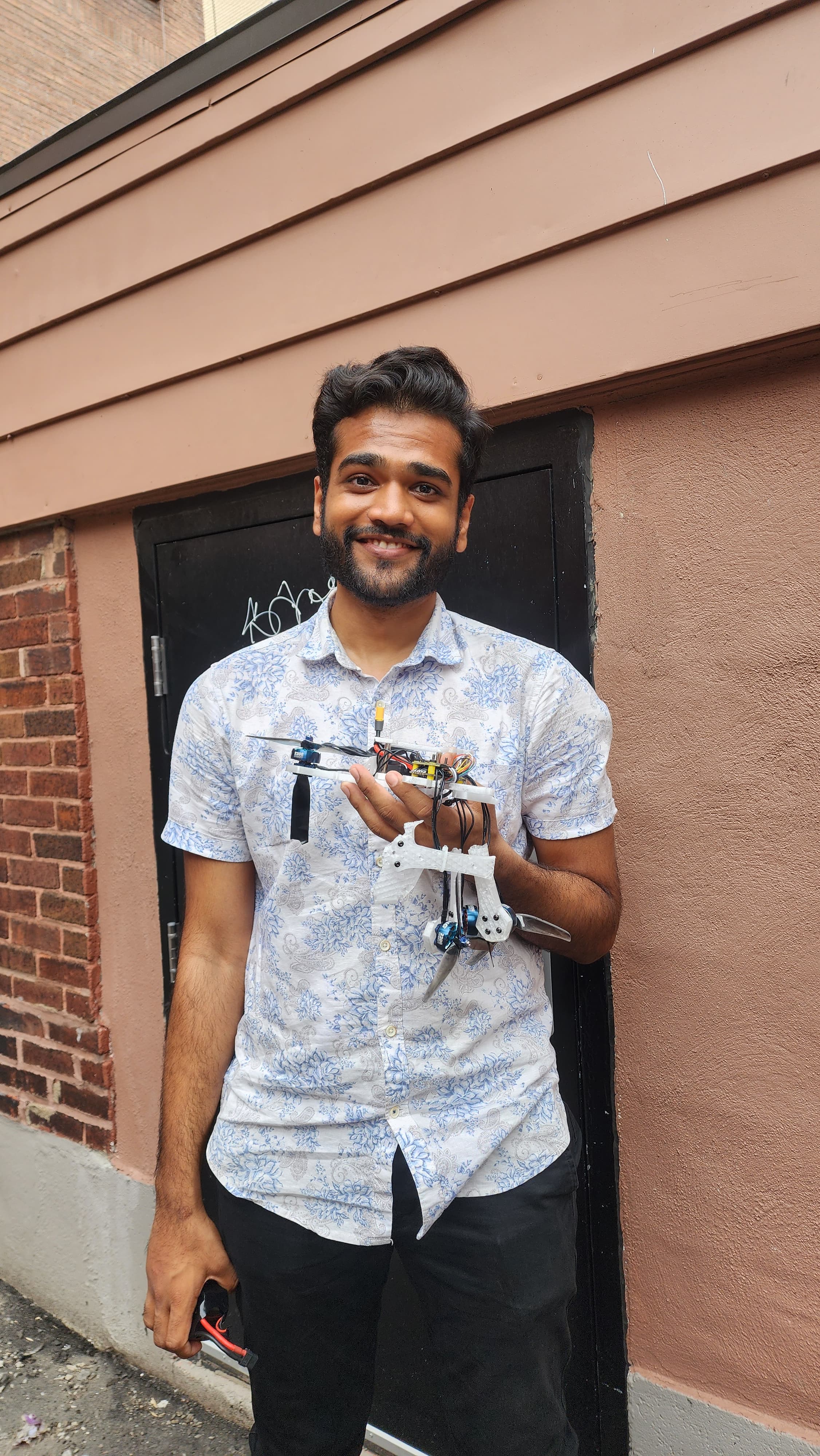
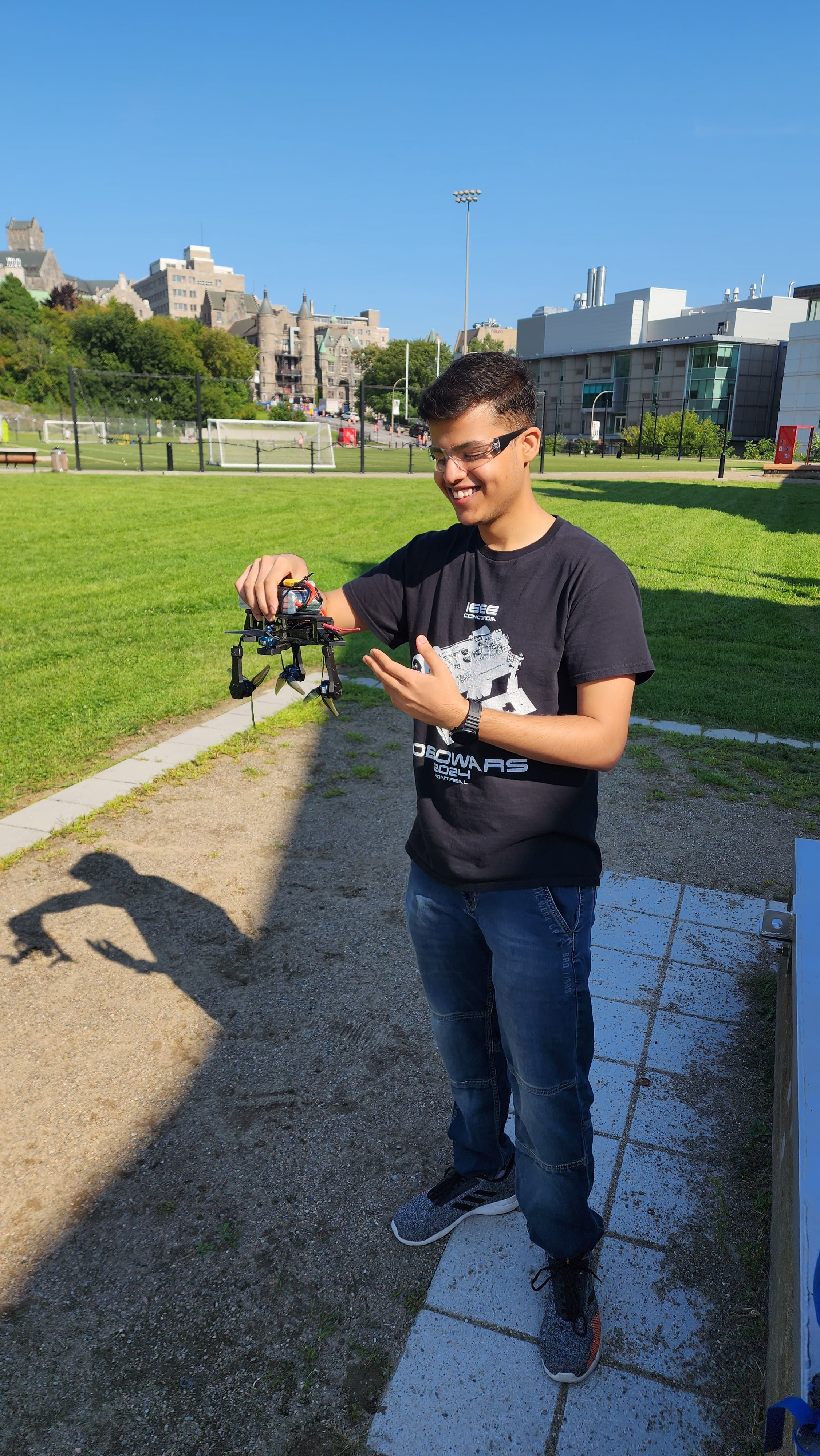
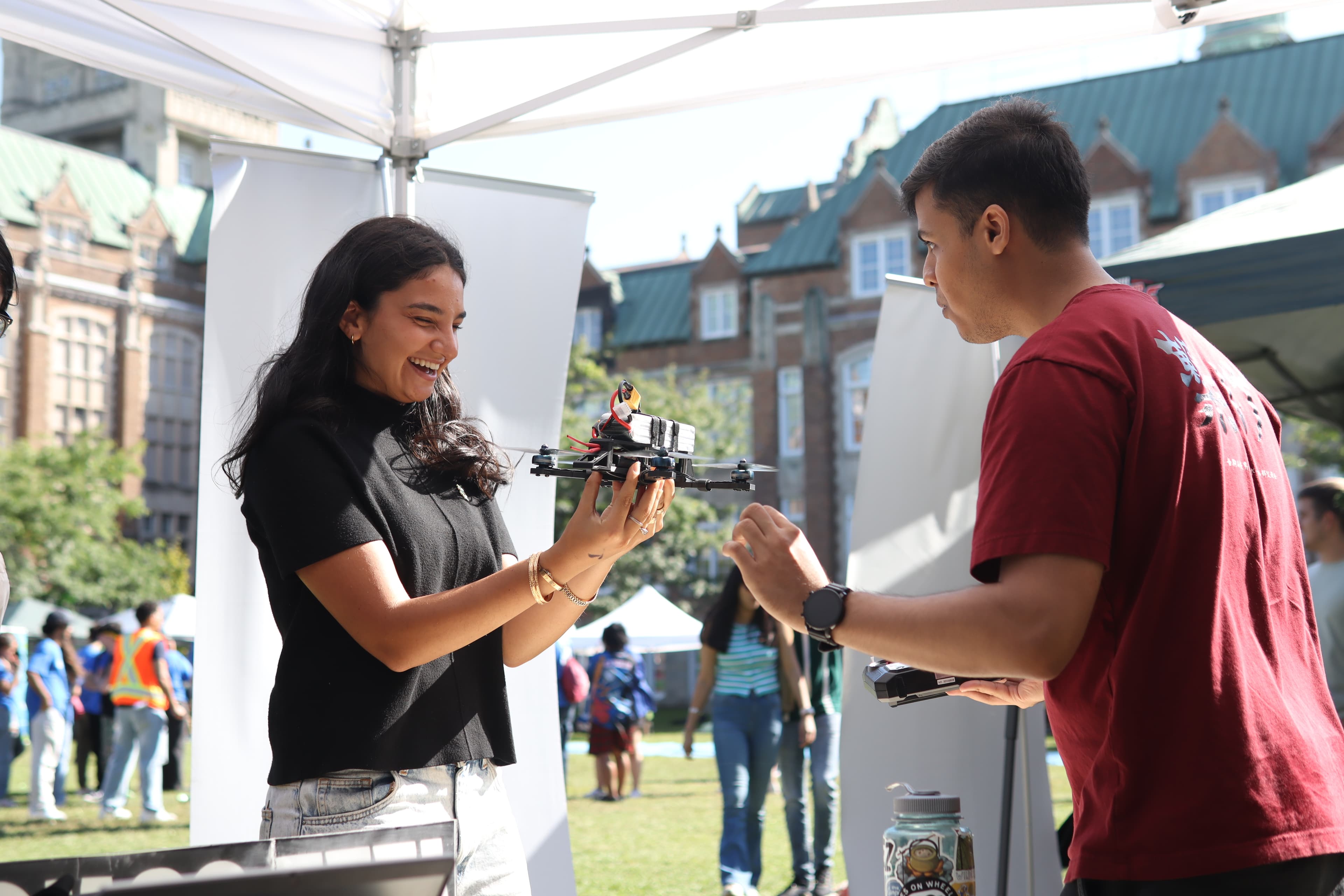
The drone hovers autonomously when hover mode is engaged — like a helicopter. No pilot input needed to maintain position.
Technical implementation:
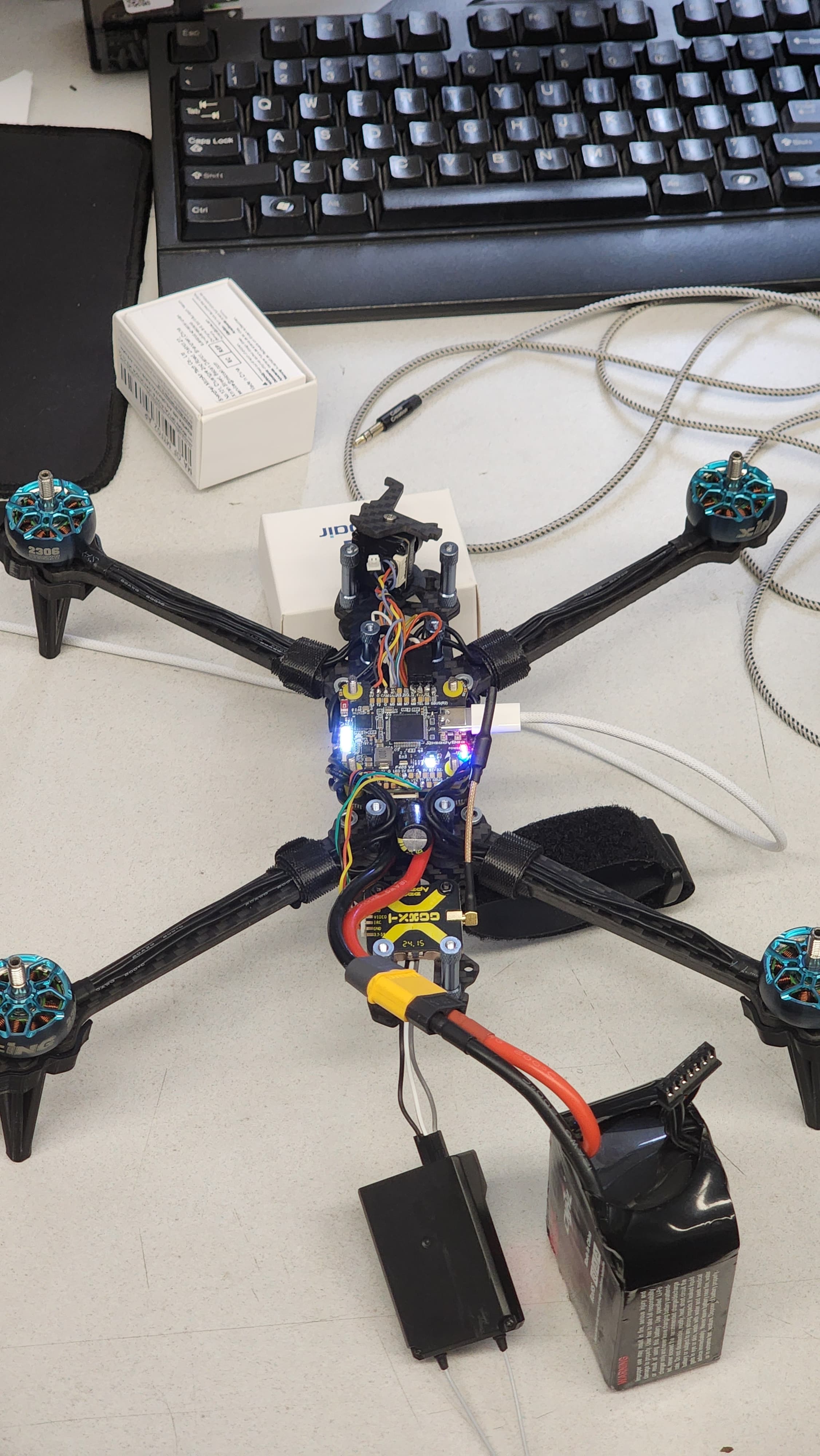
- Optical flow sensor: Measures ground velocity for position hold
- ArduPilot firmware: Flight controller software
- Custom PID tuning: Hours of parameter adjustment for stable flight
- Sensor filtering: Reducing noise for reliable altitude estimation
What We Didn't Build (Yet)
Human following: The advanced goal was a camera-based system where the drone follows a person like a dog. We had the concept but lacked the compute hardware and remaining capacity to implement it.
Team
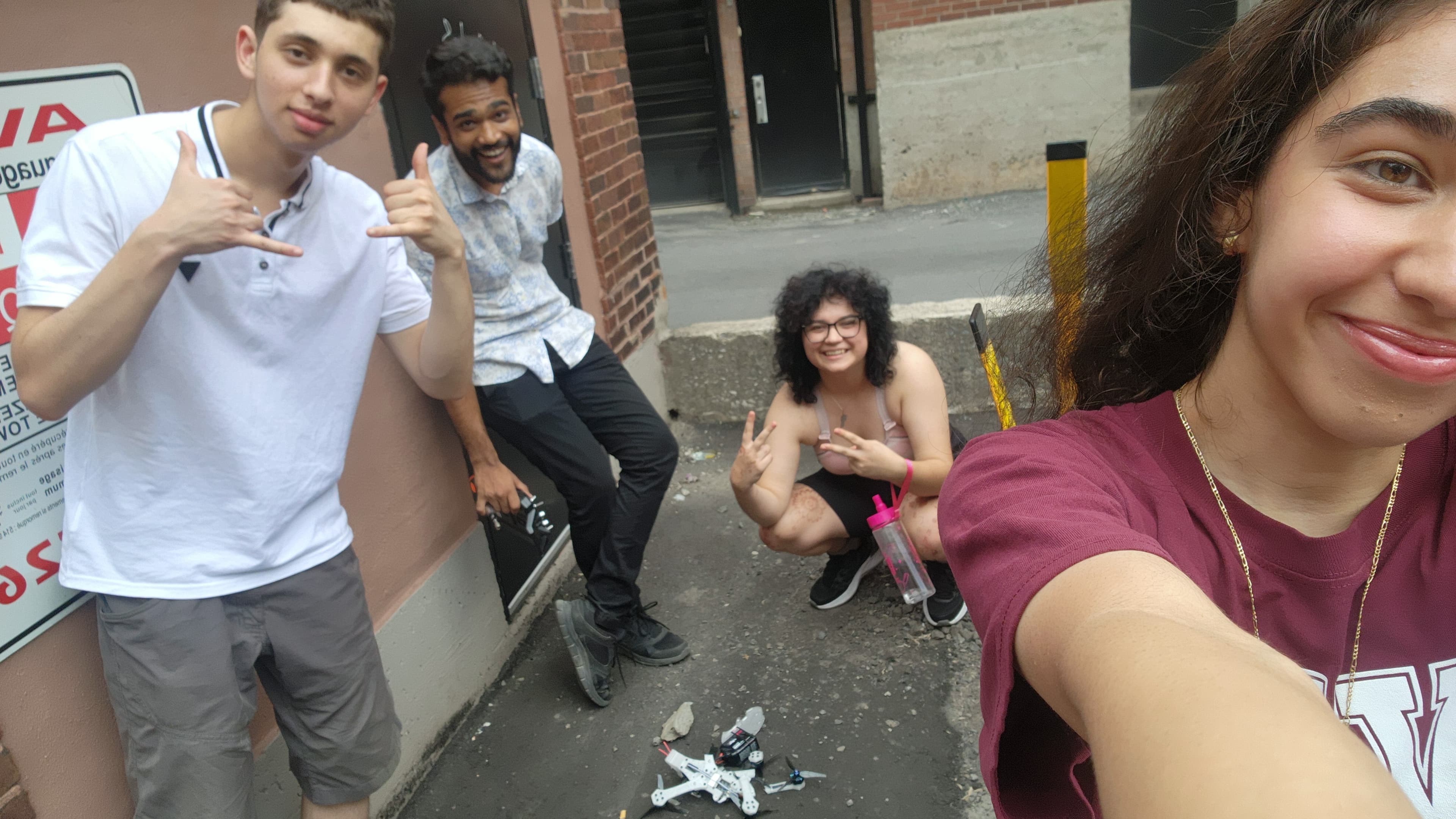
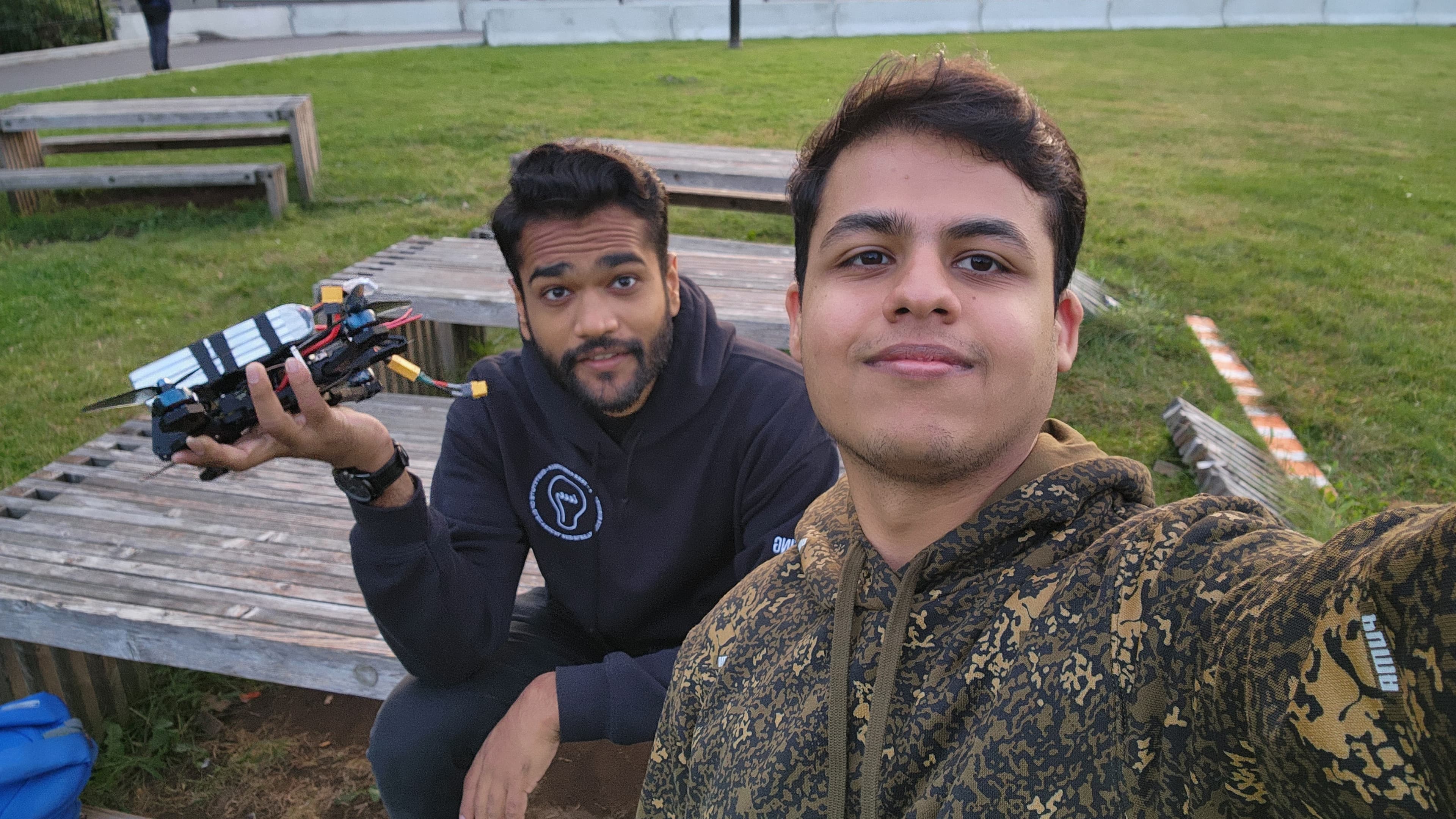
Officially 4 people, but realistically 2 full-time contributors (me and a friend). The others helped briefly but we carried the bulk of the build, tuning, and testing.
What I Learned
- Scope management: Ambitious goals are great, but you need to recognize when to pivot
- ArduPilot ecosystem: Flight controller configuration, PID tuning, sensor integration
- Optical flow: How vision-based velocity estimation enables indoor flight without GPS
- Reality of competitions: Licenses, funding, and logistics matter as much as technical ability
The Honest Take
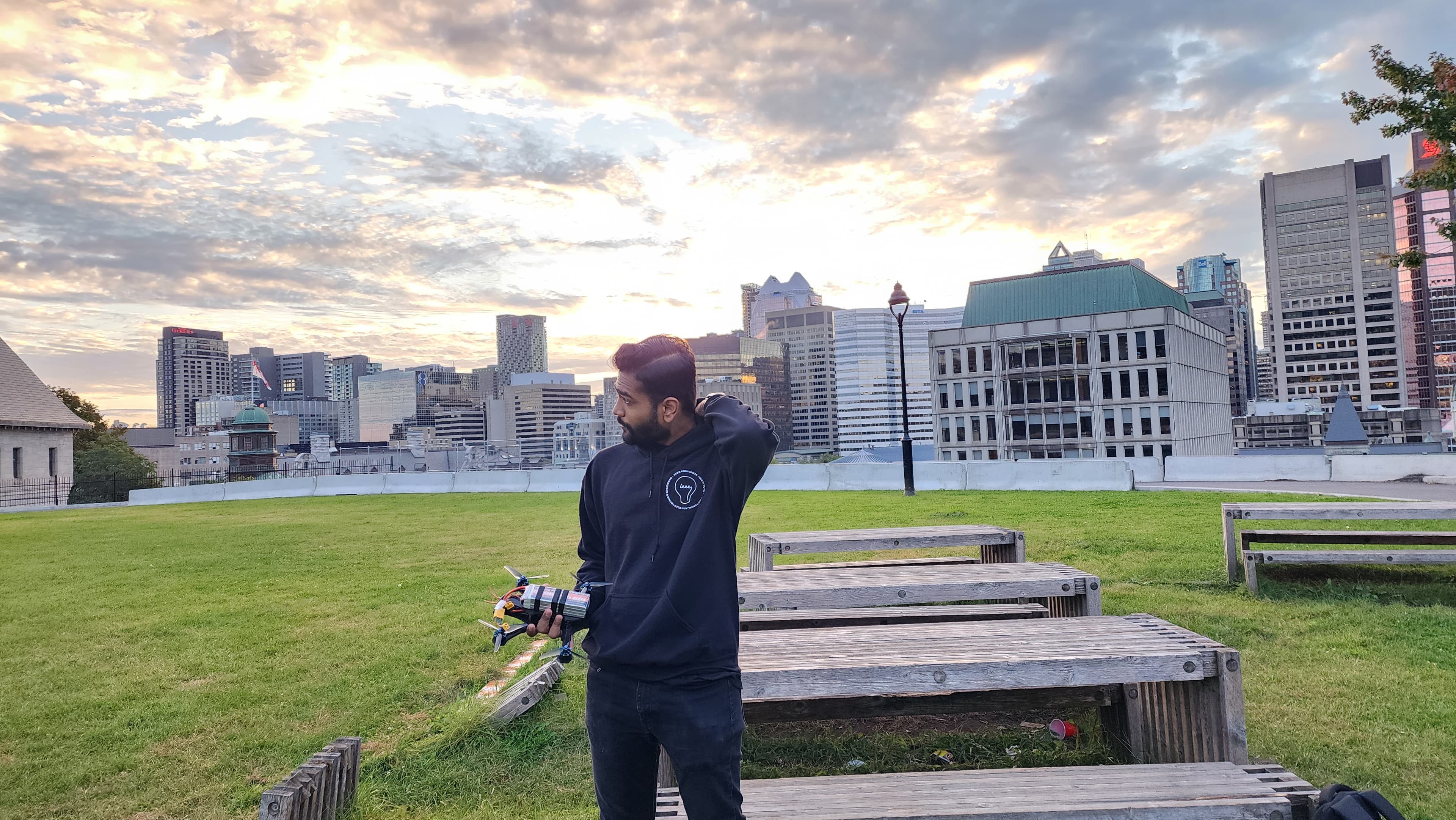
We didn't compete. We didn't build a fire-detection drone. But we did build something that flies, hovers autonomously, and taught us more about flight control systems than any tutorial could.
Gallery